Door Closers & Commercial Door Hardware — Installed Right
Stop slamming, fix latching, and protect your doors with the right closer and hardware. Local service across Northwest Arkansas.
Since 1981 • Veteran‑owned • Local shop & mobile service
COMMON CLOSER PROBLEMS
Door slams or won’t latch
-
Closer leaks oil / weak spring
-
Arm bent/loose or holes stripped
-
Wind catches door (needs backcheck)
-
Heavy door / ADA opening issues
A correctly sized/adjusted closer protects your door hardware, frame, and hinges—and helps meet accessibility goals.
CLOSER TYPES
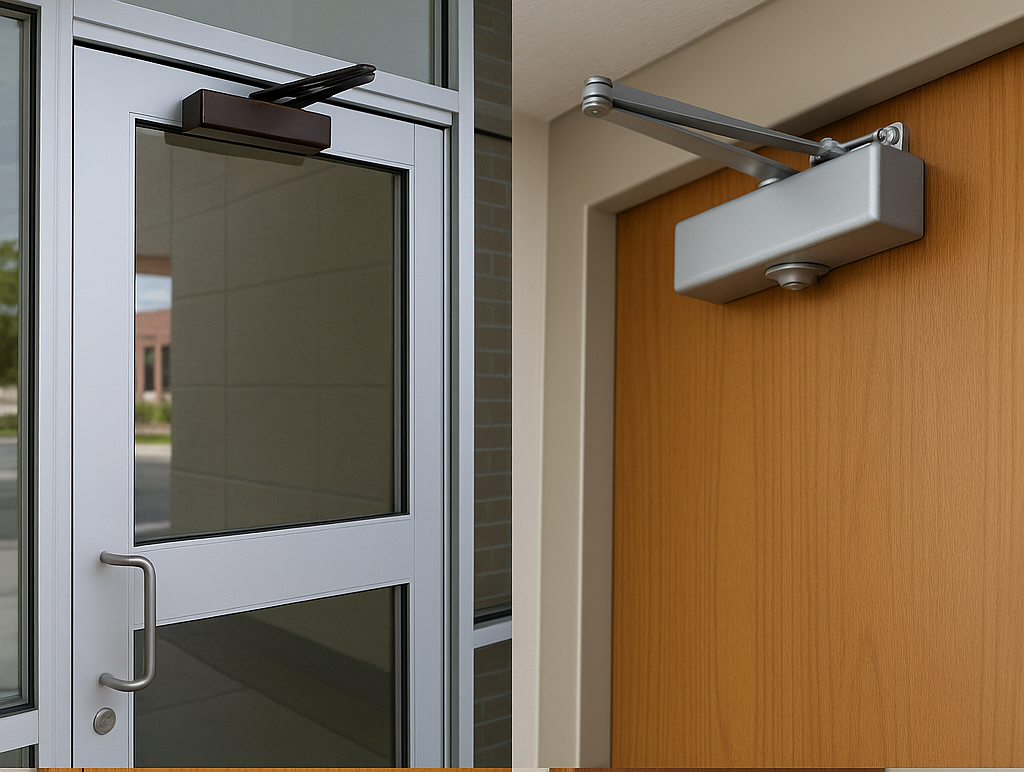
Surface Closers (most common) — Regular arm, top jamb, or parallel arm for storefronts and schools.
Concealed/Overhead — For specific frames/doors. Great look; parts availability varies.
Track/Slide Arm — Low profile, smooth action; often used in offices and healthcare.
Key Features: Adjustable power (sizes 1–6), sweep speed, latch speed, backcheck, optional delayed action.
Finish options: Aluminum/clear, dark bronze, others by request. Fire‑rated doors require non‑hold‑open closers unless using a code‑compliant automatic release.
DOOR HARDWARE WE STOCK & INSTALL
Door Viewers (Peepholes) — 160°+ field; various thickness ranges; finishes to match.
Stops — Wall, floor, hinge pin, and overhead holders to protect walls/closers.
Kick Plates — 8–12″ tall common; custom widths/heights; stainless/bronze/alum.
Push/Pull Plates & Pulls — Pair with latches/closers; ADA‑friendly options.
Thresholds & Sweeps — Seal gaps, reduce drafts, improve latching.
Strikes & Latch Guards — Reinforce security at latch edge.
Weatherstripping — Perimeter seals for comfort and energy savings.
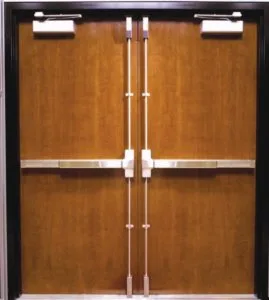
Need panic/exit devices or continuous hinges too? We do that as well (see links below).
HOW TO PICK THE RIGHT CLOSER
-
Door & Frame Type — Aluminum storefront, hollow metal, or wood.
-
Handing & Mount — Regular/Top Jamb/Parallel Arm.
-
Door Size/Weight & Traffic — Choose correct power size or adjustable unit.
-
Environment — Wind‑exposed? Add backcheck; high‑abuse? Choose heavy‑duty arm.
-
Compliance — Fire‑rated opening? No mechanical hold‑open arms. ADA opening force targets may apply.
RELATED DOOR TUNE‑UP
-
Rehang/realign door; adjust strikes
-
Replace worn pivots/hinges or upgrade to continuous hinge
-
Set closer speeds and latch timing so locks catch reliably
-
Replace worn sweeps/thresholds to stop rub and drafts
OUR PROCESS
-
Survey & Measure — Door type, handing, frame condition
-
Recommend — Closer size/mount, hardware package & finishes
-
Install — Mount closer/hardware, reinforce where needed
-
Tune & Verify — Sweep/latch/backcheck set; smooth, safe closing
FAQ
Why is my door slamming even after I adjusted it?
It may be the wrong size/arm setup, bad seals, or wind exposure—proper sizing and backcheck help.
Can I use a hold‑open arm on a fire door?
Mechanical hold‑open arms are not allowed on labeled fire doors. Use a code‑compliant automatic release if hold‑open is required.
What closer size do I need?
Most commercial doors use size 3–5; adjustable 1–6 units cover a range. We’ll measure and set it correctly.
Do you stock finishes to match my door?
Common finishes are aluminum/clear and dark bronze; other finishes available by request.
Do you install kick plates and stops?
Yes—plus viewers, push/pull plates, thresholds, sweeps, weatherstrip, and more.
Need your door to close smoothly and latch every time? Call 479‑521‑LOCK or request a quote.